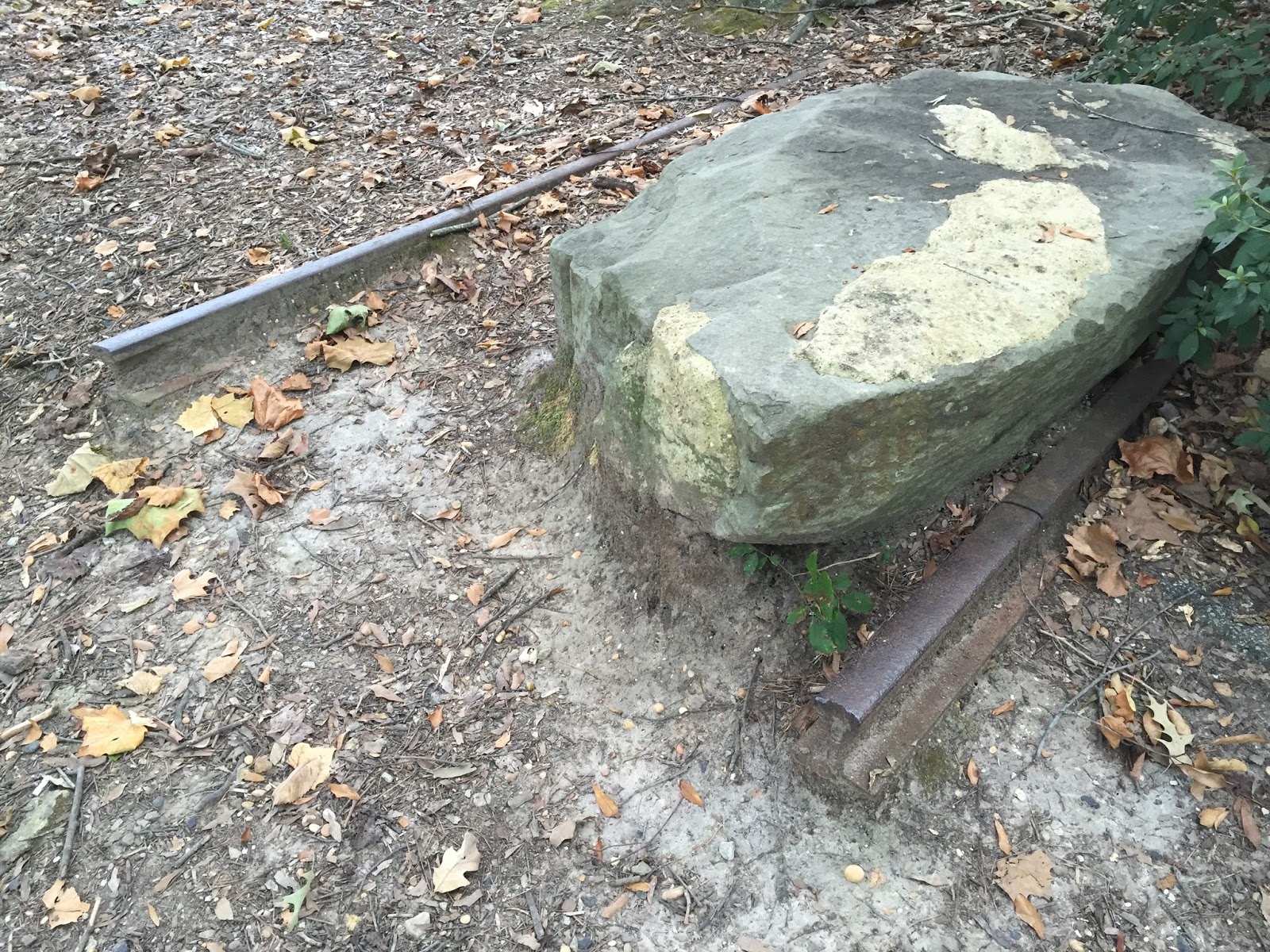
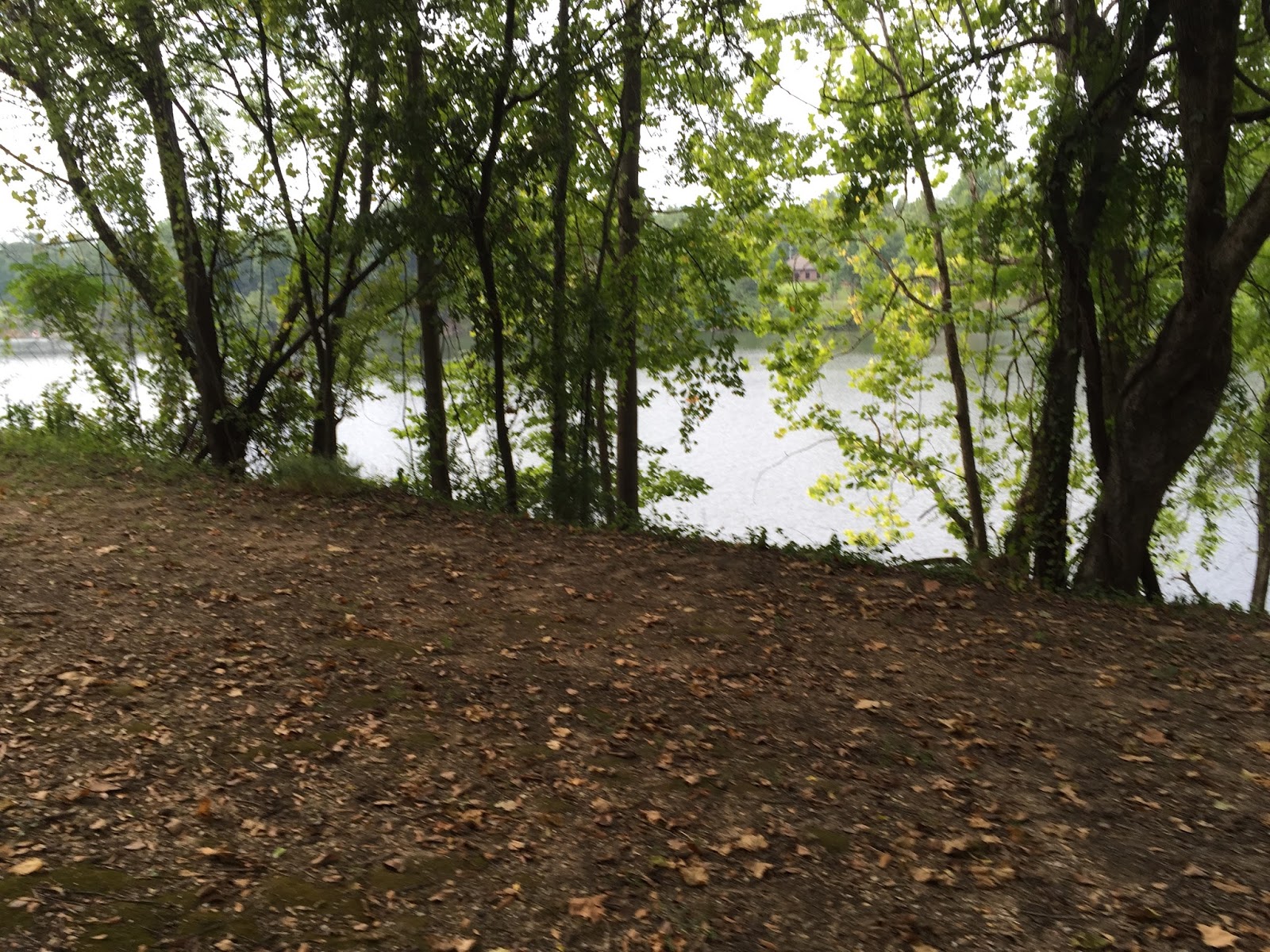
This past Wednesday, the students visited Manderson Landing here in Tuscaloosa. There, on the banks of the Black Warrior River, they saw remnants of the L & N Railroad line. This visit figures into a lesson on transportation, mobility and power in the nineteenth century. With the arrival of the steamboat, which moved along inland waters, people and products began to move through space in an urbanizing world. Railroads are a part of this narrative. The students were also made aware of how people of African descent, even ones enslaved, participated in these technological advancements.
Using David Cecelski's study on black watermen in antebellum North Carolina, they begin to see how even oppressed groups had the skills to navigate waterways. Robert Smalls, an enslaved boat pilot and later, Congressman, even escaped slavery on a vessel he piloted for the Confederates.
Notably, Horace King, an enslaved bridge builder, constructed bridges throughout the south. He was of huge assistance to Alabama Sen. Robert Jemison Jr., whose many business interests included building bridges and turnpikes during the antebellum period.
After my lecture and the visit, the students wrote reflections on these and other issues. Wrote Adams, "With the emergence of the 19th century city, some men learned skills that will translate into power, skills that even privileged white men did not possess at the time." Added Lin, "I was really surprised [to learn about men like] Horace King who were able to do thing that ...other black people...would not have been able to accomplish." Chance made connections between oppressed minorities in other settings, among them, ones residing in Turkey, who are able to gain control simply because they moved through space. Wrote William, "Space define[d] a relationship between man his quest for power." Morgan homed in on how information, not just people and products, trave[ed] faster with advancements in technology.
These short reflections are worth 25% of the students' overall grade. I think they are off to a great start. When we meet on September 30, we will tackle the issue of civility in an urbanizing world. We will be attentive how people had to learn how to behave in public settings as an middle class urban population began to emerge in the United States during the nineteenth century.
Showing posts with label railroads. Show all posts
Saturday, September 12, 2015
exploring the issue of mobility and power in an urbanizing America
Labels:
black warrior,
horace king,
railroads,
robert smalls,
the nineteenth century city,
tuscaloosa,
waterways
Wednesday, September 10, 2014
transportation and emerging urban life
Our discussion went beyond Wilmington and included other waterway narratives. For example, the students learned that former South Carolina Congressman Robert Smalls was among the enslaved maritime workers who aided the South during the Civil War. A boat pilot, Smalls escaped on a steamer in 1862 with his family and other enslaved people and eventually served in the Union Army.
Altogether, there were several opportunities for the students to see the ways that railroads and water vessels were useful on many fronts including this momentous war. For sure, the Weldon Railroad, running north from Wilmington to Richmond and Petersburg, was a critical transportation artery in sustaining Robert E. Lee's army of northern Virginia during the latter stages of the U.S. Civil War.
The students were given homework assignments that require them to analyze three pages of a diary kept by Nathaniel C. Kenyon, a man who served in the 11th Illinois Infantry. A copy of this diary is in UA's Hoole Library. In it, Kenyon wrote detailed descriptions of the southern cities through which he traveled, among them Tuscaloosa.
In light of today's reading on how enslaved men evidenced power in the maritime industry, I look forward to sharing excerpts from the students' work in an upcoming blog entry. I hope they are able to intuit the ways in which Kenyon also evidenced power although he was a prisoner of war. In what ways does his life compare to the men in Cecelski's study? What new things does he teach us about urban life in nineteenth century America?
![]() |
| Beeler points out the path of the L & N. |
Afterwards, we walked down to the nearby Black Warrior River to hear a short lecture by Dr. John Beeler of UA's History Department on the development of railroads in Tuscaloosa. Hear an excerpt from his talk on this blog post.
Meanwhile, here's a brief chronology that allows us to see Tuscaloosa becoming part of an urbanizing Alabama:
1871: The Alabama and Chattanooga Railroad (renamed the Alabama Great Southern Railroad in 1878) is completed, creating a diagonal link across Alabama that includes Tuscaloosa.
1898: The trestle that runs by Tuscaloosa's Amphitheatre (2710 Jack Warner Parkway NW, Tuscaloosa, AL) is constructed across the Black Warrior River for the Mobile & Ohio Railroad. The M & O ran between Columbus, MS, and Montgomery.
1890s: A system of locks built on the Black Warrior River permits a cheap way to move goods to Mobile, a Gulf port city, stimulating industry in Tuscaloosa.
1912: Chartered in 1850 in by the state of Kentucky, the Louisville & Nashville Railroad, formerly the Birmingham and Tuscaloosa Railroad, arrives in Tuscaloosa, passing near campus. Its 20-mile Tuscaloosa Mineral
branch line reaches Brookwood coal mines. L &
N’s station (301 Greensboro Ave, Tuscaloosa, Alabama) is now
used for weddings and other social events.
If there are any errors in this timeline, they are mine alone. I'm still learning this history. I welcome feedback.
| Dr. John Beeler's map of Tuscaloosa railroads. |
Labels:
john beeler,
railroads,
tuscaloosa,
university of alabama
Subscribe to:
Posts (Atom)
